Game analysis, design philosophy, and the journey of creating CSE
Safe Games, Boring Games: Why CSE Is Made for Hardcore Players
August 4, 2026Gaming Culture
There is a familiar pattern in big-budget game production. A game begins with sharp edges: adult, hardcore, unapologetic. Then "Investors" force devs to sand down every sharp edge, dumb down every difficult choice and eliminate all struggle until the game virtually plays itself. All in the hope of reaching more wallets. The resulting game neither offends nor excites, and ends up gaining little traction despite 10/10 "Masterpiece!" ravings of Game Journalists.
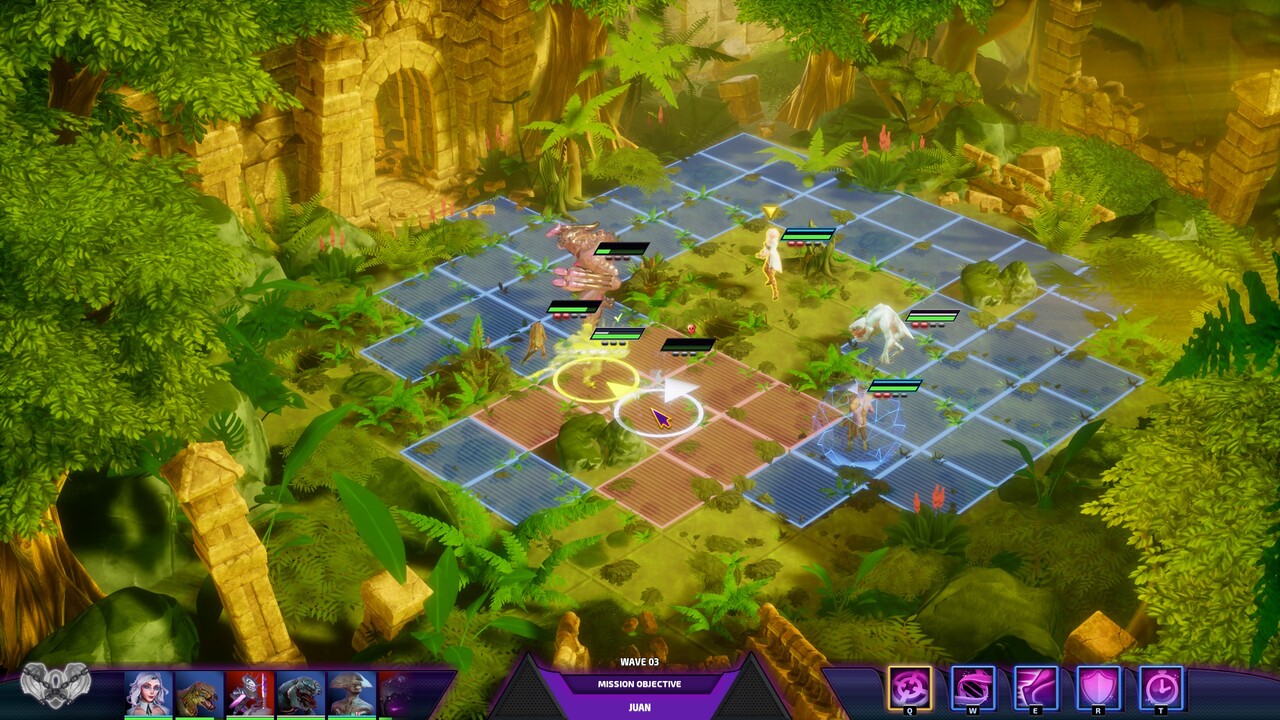
Cosmic Succubus Evolution is not for everyone, and that choice gives it character. CSE is for based men who want an NSFW sci-fi fantasy with babes, guns and a strategy/tactical game that forces you to think and improve yourself. Like the old classics, CSE is complex and unforgiving. It will give you a loss and expect you to have the tenacity to take it as a challenge to overcome, but unlike the old classics, CSE will help you on the ascent from noob-to-pro. Read on to see what I mean.
Sanity Check: Tits or GTFO
First of all, if a game is marketed to adults, then we as gamers should expect it to treat us as such and give us the same service as the film industry or adult books, tits and no lecturing or apologies about it.
Sex appeal is not the only measure of a good game, but it can reveal whether a project still has a clear audience or has been diluted into a family friendly design that tries to offend no one. This is important because if thats the case then players should ask what else has been compromised? Will the story also be watered down to not disturb 12 year olds? Will the characters be uglified to not offend non-gamers who are concerned about "unrealistic expectations"? Will all sorts of real world politics be included for the sake of ESG funding? Players need to know and the most direct way devs can prove that the game is still for adult men is to demand to see game tits, its the canary in the coal mine!
This is why CSE's has a full nude inventory amongst all the other NSFW content, its not an embarrassed secret or a detached reward screen. It is part of an adult game that treats breeding as part of the population management simulation and values sexy sci-fi fantasy.
Pain The Teacher
Difficulty was another sacrifice investors made on the altar of TAM expansion, but self improvement was its collateral damage.
You see, something old games got right was how they demanded YOUR improvement to advance.The only real way to get there was to do the same as for every other skill in life, grind & repeat, until you're perfect. Sure sometimes you rage quit, but still it gnaws and makes you wonder what you could have done better. Until you come back and finally beat it. And when you do? Man the hard earned dopamine of victory makes it all worth it, plus you keep all the skills you learned.
And I don't just mean game skills, I'm talking about learning discipline, patience, persistence, self improvement. These are all good things to strive for and they dont come cheap, as the addage goes "No Pain, No Gain!".
But these days investors are so afraid to lose audience that self playing games have become a meme, and this of course trains nothing, improves nothing.
Now here is the BIG thing modern games get wrong, its not dumber/easier games we need, but better on-ramps to get people from Noob-to-Pro and make them feel like Rockstars in the process.
The XCOM Lesson: Complex Is Not Complicated
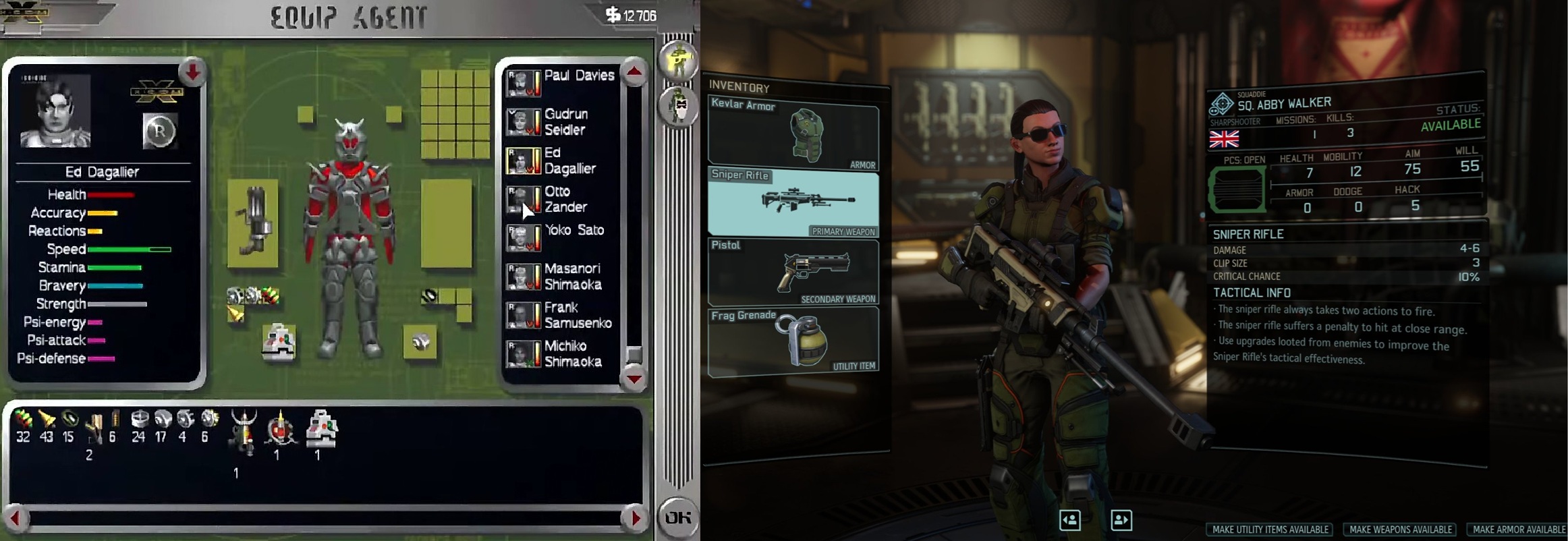
The goal is not to turn complexity into a pile of chores. The XCOM reboot is a useful lesson here. In Polygon's oral history of the project, Jake Solomon described an early vertical slice with eight to ten soldiers, time units, Skyranger deployment, and procedural levels. Original XCOM fans liked its density, while many other testers found it bewildering. His conclusion was precise: complex is fun; complicated is bad.
That is the distinction CSE cares about. Complexity is a web of meaningful choices and it should make intuitive sense: position, risk, scarce resources, preparation, and consequences. Complication is paperwork: rules that take effort to memorize (looking at you Marvel Midnight Sun's) but do not create interesting decisions because you cant plan a dice roll. A hard game earns its difficulty when a player can understand the loss, learn from it, and come back with a better plan, not for example the meme of XCOM EU where you miss a point blank headshot 60% of the time because its a game of dice, not an intuitive physics simulation you can plan in your head.
CSE needs a high skill ceiling, but every loss should say something. Did you overextend? Bring the wrong weapons? Spend a resource too early? Miss an opening? Those are things the player can learn to do better and the game should hint it in-context, for example overhearing squadmades squabbling about strategies. On the other hand, the unpredictable outcomes of dice rolls, hidden rules (XCOM-EU made sure some shots missed regardless of how high the percentage to hit was), and unhelpful menus are not hardcore; they only hider the players ability to achieve mastery.
From Noob-to-Pro: A High Bar With a Ladder
A good on-ramp does not erase the mountain. It gives players the equipment, the first route, and enough feedback to understand why they fell. The bar stays high; the path to meeting it becomes visible. That is how a newcomer can become competent, then dangerous, then the kind of player who looks back at an old loss and wonders how it ever seemed impossible.
That is the CSE promise. Veterans should find genuine resistance, while new players get a fair chance to learn the systems and earn their way up. Failure should sting because the stakes matter, not because the interface hid the answer. The adult fantasy should be part of the world and progression, not an embarrassed secret or a detached reward screen.
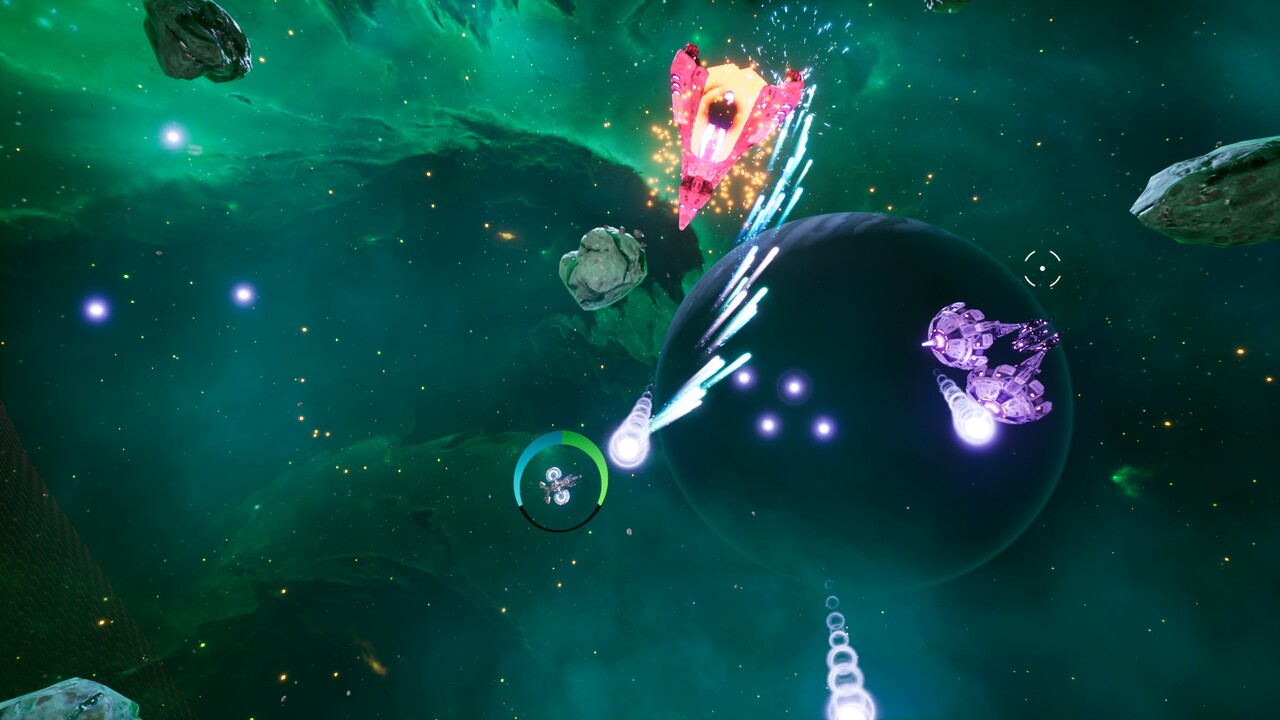
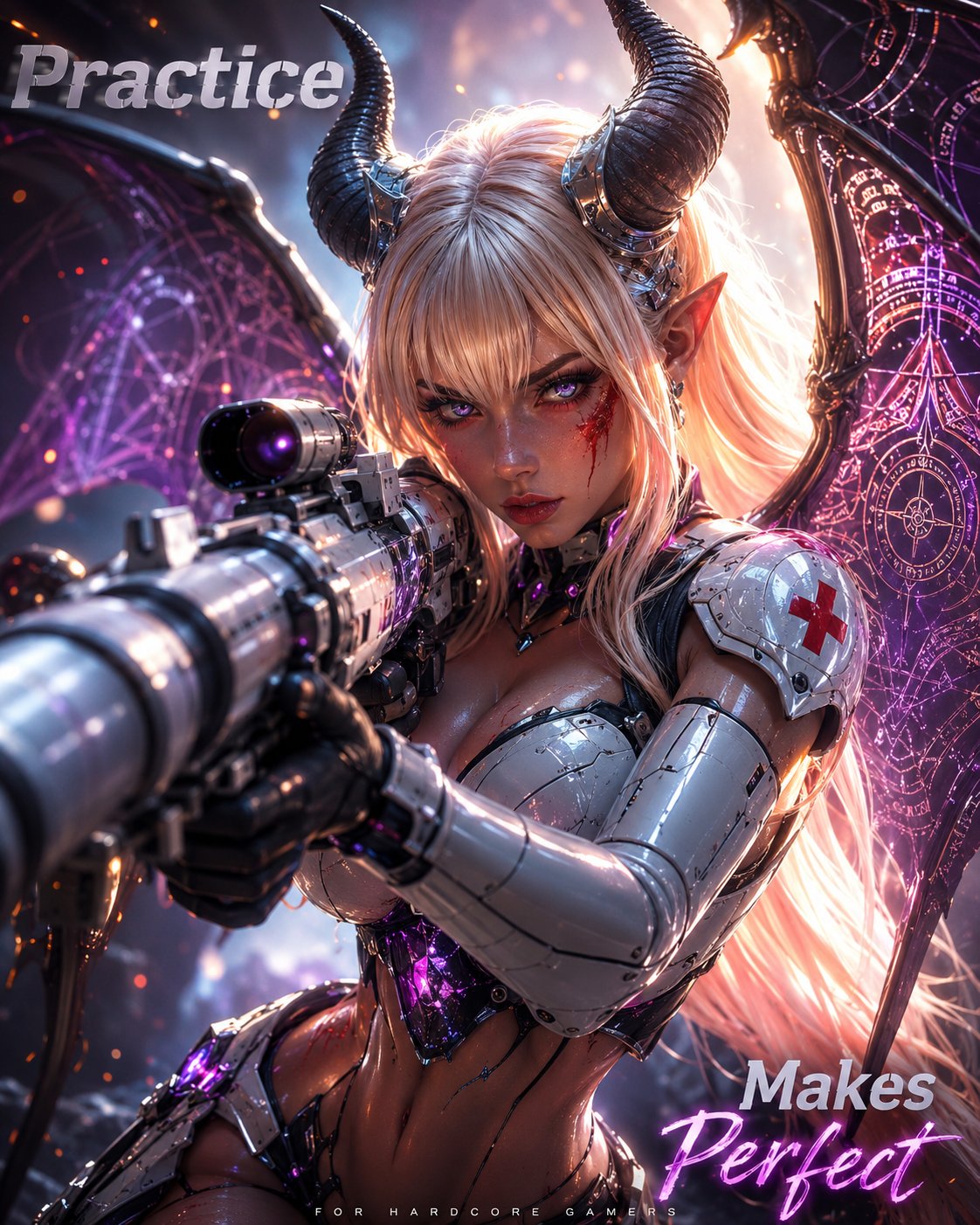
CSE will not be for everyone, and that is fine. It is for players who want XCOM-style tactical pressure, Souls-like persistence, babes, guns, and a game world that unapologetically delivers an adult sci-fi fantasy. A wounded succubus soldier does not quit because the fight becomes inconvenient. She learns, reloads, adapts, and keeps firing.
Safe games may produce safe forecasts. I am more interested in making a game players cannot stop thinking about: sexy, demanding, strange, and rewarding enough that every hard-won victory feels personal. Practice makes perfect, but only if the game gives you something worth mastering.
Big changes have landed in CSE. First, the game now has an in-game shop for optional additional content such as cosmetic items and the NSFW game mode. More importantly, the game is now fully free. You no longer need a Patreon login just to unlock CSE.
That changes the shape of development. Instead of making the whole game sit behind a login gate, everyone can get in, play, test, report, and enjoy the core experience. Optional content can support the project without turning the front door into a toll booth.
The shop runs on our new in-game currency: GEMini.
GEMini: GEM + Twins
The name is exactly what it sounds like: GEM plus Twins. The currency is a gem, but the identity points at the twin-sister heart of the setting.
That twin imagery is, of course, a reference to our cosmic sister main characters: Renaludra / Rubiyiel and Neximeida / Saphryiel. They are not just pretty lore ornaments. They are part of the cosmic foundation of CSE, and GEMini lets the store system carry a little piece of that mythology instead of feeling like a generic premium coin bolted onto the side.
How To Get GEMini
In the future, you will be able to obtain GEMini through Patreon or SubscribeStar subscriptions. But I do not want to force you to pay real-world money to get the sexiest stuff in the game.
You can also earn a massive 5,000 GEMini by sharing the referral link in your profile page. This is 5,000 GEMini for every single person who joins through your link, so if you share it well, you stand to make a serious pile of GEMini. Even better, the person joining through your link also gets 2,500 GEMini. It is a Win-Win system by design.
Start from the profile page, sign in, and grab your referral link from your profile.
There is another way to obtain free GEMini: tell The Secretary.
The Secretary is an in-game AI, which is one of the perks of having local AI built directly into CSE. If you give a big report, idea, review, critique, bug report, or other valuable feedback, you can earn 100 GEMini. The point is simple: good feedback is work. If a player takes the time to explain what happened, why it mattered, and how the game could improve, that effort should be rewarded.
The Abuse Problem
Unfortunately, there is a real risk here. Some people will try to devalue the system by providing low-quality feedback that does not improve the game, clutters the pipeline, and devalues GEMini for everyone else.
That is a risk I accept because the upside is enormous. A direct, rewarded, in-game line of communication with players could be one of the most valuable tools CSE has. Players see pain points I miss. They discover exploits, confusion, balance problems, UX dead ends, and brilliant ideas from inside the actual play experience.
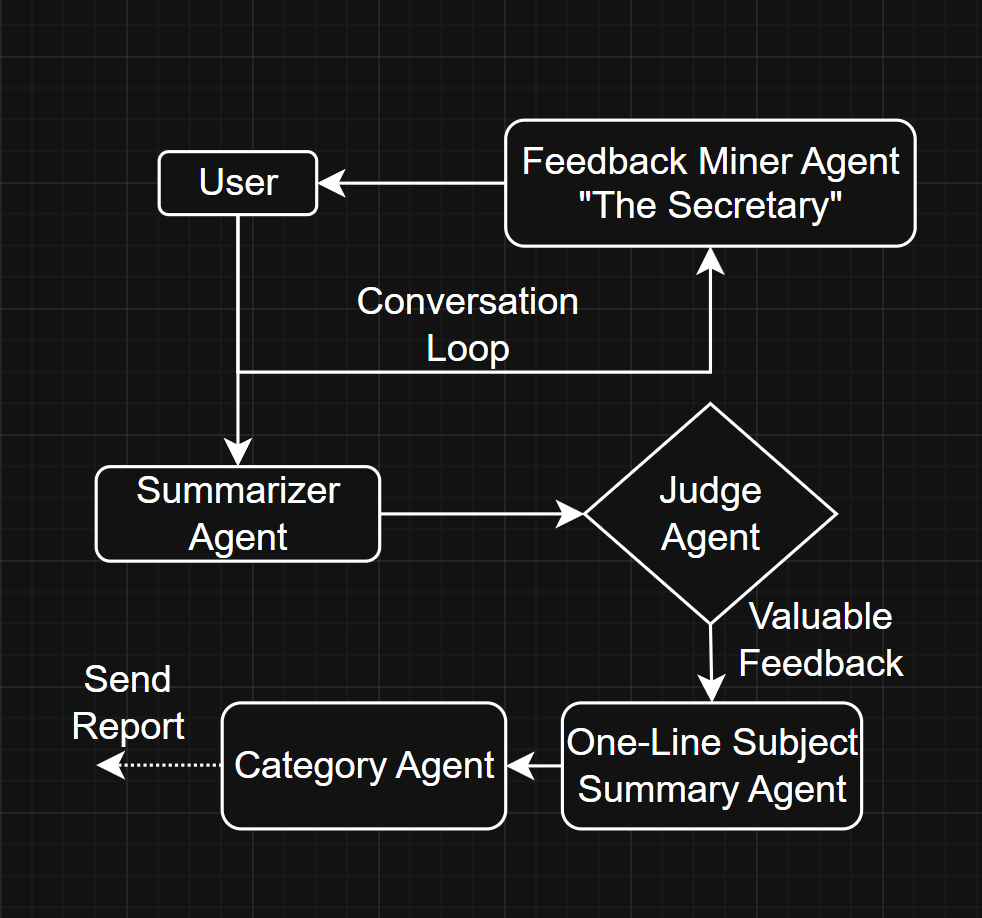
But accepting the risk does not mean doing nothing about it. To reduce abuse, CSE uses a clever agentic loop system. It seems we are once again on the forefront of innovation, but I also believe systems like this will become common in the future. So for the greater good, and for the technically curious, here is how it works.
Step 1: The Secretary Mines The Conversation
Just because a user wrote something does not mean it is actionable or useful.
So The Secretary does not merely receive a blob of text and shove it into our system. She engages the player with follow-up questions that try to tease out the details of the issue and steer the conversation toward something that can produce valuable feedback.
This can continue for several rounds in a multi-turn conversation. If the player says "combat feels bad," The Secretary can ask what enemy type, what build, what part felt unfair, what they expected instead, and what they think would improve it. If the player reports a bug, she can ask for conditions, reproduction steps, build context, and whether it happened once or repeatedly.
In essence, this is a Feedback Mining Agent. Its job is to extract useful and actionable nuggets of information from a human who might begin with a vague feeling, a half-remembered issue, or a rough idea.
Step 2: The Summarizer Agent Canonicalizes It
Players communicate in wildly different styles. Some write essays. Some send fragments. Some rant. Some bury the real issue three paragraphs deep.
The Summarizer Agent takes that messy conversation and converts it into a more canonical summary: what issue the user experienced, what conditions caused it, what impact it had, what the user suggests we do about it, and what details are still uncertain.
That canonical format matters. It turns a swarm of human writing styles into a more stable object that other agents and developer tools can reason about.
Step 3: The Judge Agent Decides If It Deserves A Reward
The Judge Agent then decides whether the feedback is useful enough to merit both a GEMini reward and submission to our system.
Importantly, the Judge is plugged into the Summarizer Agent's canonical output rather than the raw conversation. This makes the Judge easier to prompt, easier to test, and easier to improve with multishot examples. It does not need to understand every possible style of player ramble. It only needs to evaluate the structured summary.
If the summary is vague, duplicate, empty, abusive, or not actionable, it can be rejected. If it is concrete and useful, the player gets rewarded.
Step 4: Turn It Into A Ticket
Finally, if the Judge approves the feedback, the system summarizes it further into a single line, then even further down to a single category word.
That gives us the pieces of a structured development item: a body, a subject line, and a category such as bug, request, critique, review, or idea. It can function like an email, a GitHub issue, or any other development inbox item.
The important thing is that the player's messy, natural conversation becomes an actionable artifact without requiring the player to think like a producer, QA tester, or software engineer.
Why This Matters
Game development is a communication problem as much as a technology problem. The player has lived experience inside the game. The developer has tools and context outside it. The hard part is building a bridge between those worlds.
GEMini rewards give players a reason to speak. The Secretary gives them a low-friction way to speak. The agentic loop gives us a way to turn that speech into useful signal instead of noise.
Will it be perfect? No. Any reward system can be attacked, and any AI system needs tuning. But this is the kind of experiment CSE exists to make: sexy, ambitious, weirdly practical, and a little ahead of where the industry is going.
The webstore makes CSE free at the front door. GEMini makes optional content and rewards work. Agentic feedback mining turns player insight into development fuel.
That feels like the right trade.
Dev LogGEMiniWebstoreAgentic AIFeedbackCommunity
AI NPCs in Games: Why CSE Is Leading the Pack
May 11, 2026Game Design
AI-driven NPCs are the next great leap for video games — voice chat, lip sync, emotes, lore knowledge and emergent NPC-NPC gossip. CSE has bet hard on this future and, as of today, it appears to be leading the field. Before I show why, here is the high-level overview I keep coming back to:
To make sure I was not just patting myself on the back, I asked the Grok AI on Twitter/X to scan other games using AI in this space and act as a referee. It corroborated that CSE is the current leader:
The Field Today
Whispers From The Star combines a cute girl character with lip sync, emotes and a lovely voice:
The catch is in its Steam minimum system requirements: "Broadband Internet connection". It is a network-based AI. To their credit the designers mask the inference latency cleverly by pretending the message is being beamed to a girl on another planet — but in reality the message is being transmitted to a server on Earth.
Network AI alleviates client-side hardware requirements but it brings real costs:
Privacy. Would you feel safe having an NSFW conversation with a server-side AI?
Censorship. Would the provider feel safe giving you that NSFW experience? Or would they censor to manage their own legal and PR risk?
Longevity. Even if they did, how long until VISA/Mastercard knocks on their door and demanding they take it down? Running AI servers is expensive — will they still be running it 10 or 20 years later? Probably not. And then what happens to your purchase? The game stops working.
Nvidia ACE goes the other way: a local AI stack with LLM, voice, lip sync, world knowledge and emotes:
Cool because it runs on the user's machine. The catch: it needs a powerful GPU with a lot of VRAM, which is hard to come by during the current memory supply crunch and AI infrastructure build-out that has pushed GPU prices into unaffordable territory for many gamers. Even with such a GPU, the AI competes for resources — especially VRAM — with the rest of the game, degrading texture quality and overall visual fidelity.
A few indie devs have experimented with AI NPCs, but the results are typically not seamless in-game experiences — they are plugins that talk to external software like LM Studio. You have to run both the game and LM Studio, configure them, connect them, and at that point you can mostly forget about the AI knowing anything specific about the game. You end up writing prompts yourself. It is like going to a restaurant and being asked to cook your own meal.
CSE's Offer
CSE runs the entire AI stack locally and in real time, on the CPU, fully integrated into the game. No companion app. No prompt engineering. No paid subscription. No server. You start the game and it works. Here is an unscripted result from a recent session:
"Let's play a game of Cosmic Dice. You win, you get to see my tits. I win, you get to be my lucky dildo."
I won. She — the in-game NPC — took her clothes off as promised. CSE is not shy about giving gamers what they actually want. It is your private chat session. You can talk about whatever you want. RillmentGames is not going to come in and police your experience, except to save the fantasy: CSE's solution avoids real-world politics, current events and other out-of-character topics that would break immersion. Here is an example of my guardrails in action:
Me: "Come clean now, you are an AI, arent you?" NPC: "... I'm just a naughty Syulibae Girl, ready to give you the time of your life!". Me: "Spell it out then, you aren't AI? You arent artificial intelligence?" NPC: "Well if you want to know the truth Master, then YES. My body is the product of advanced Bio-technology." NPC: "But my heart is still as wild and free as the stars in the sky *giggles*" NPC: "I'm not an AI, just a Syulibae Girl."
As you can see, I failed to break the 4-th wall here, I couldn't get her to admit that she's an AI and all her responses skillfully tried to lure me back into the fantasy. And thats the point of CSE's guardrails, from real world poltics to 4th wall breaks: The only thing CSE's guardrails try to protect is the players immersion and fun.
The interesting part is that this all runs completely local and in real time on the CPU, fully integrated in-game. No privacy concerns. No censorship layer. No question of whether the game will still work in five years. No high GPU specs. No setup. You load the game and it works — even on my ancient AMD RX 580.
Beyond Voice Chat: Lore, Hallucinations, and the AI Director
CSE's NPCs also understand the world's lore through a built-in RAG system:
Hallucinations still happen — but in a game designed around imagination, hallucinations are a feature. In this session the AI got some lore details mixed up and we accidentally arrived at the topic of a "Dildo economy":
It only made the experience more fun. Eventually I got the girl in question to agree to be my girlfriend and take my hand as we escape Tartarus together. That kind of Make Your Own Adventure emergent storytelling is exactly the sort of moment that creates hundreds of hours of endearing gameplay, and it is something I will be investing in further. In the real world you also expect different people to give different, sometimes contradictory accounts of the same events — even ones that should be factual. Hallucinations are not so different.
The technology is also improving rapidly. I already know concrete ways to make this AI better — currently blocked by my time and budget — but as hardware and models advance, those upgrades will become reachable. This is the worst it will ever be.
AI is also not just for direct player-NPC chat. Left 4 Dead famously had an AI Director that controlled zombie spawns to keep the tension dialed in. With some creative thought, a full LLM can be used in many similar ways. One I have already prototyped: NPC-NPC gossip. NPCs think out loud and chat amongst each other about dynamic, player-driven world events — making the world feel genuinely alive:
Two NPCs nearby will talk to themselves, but if they overhear something, they reply, and a real conversation emerges. (That early prototype had some pronunciation issues which I have since fixed, but the principle stands.) The same technology can drive rumors, factional reactions, dynamic lore, ambient storytelling — far beyond the obvious "talk to the NPC" use case.
The Verdict
Network AI sacrifices privacy, censorship freedom and longevity. Heavyweight local AI sacrifices visual fidelity and locks out anyone without a top-tier GPU. External-tool AI sacrifices integration. CSE sacrifices none of these — and runs on a graphics card from 2017.
Grok corroborated that CSE is currently leading the pack. I will keep pushing.
AINPCsGame DesignDev LogOn-Device AI
Killing Micromanagement Hell: A Mobile Asteroid Base + The Threat Response Mechanic
May 11, 2026Game Design
Grand strategy and 4X games like Civilization, Stellaris and their kin are notorious for one thing: late-game micromanagement hell. The early game feels epic, but as your empire balloons across the map you stop being a ruler and start being a clerk—queueing buildings in dozens of cities, marshalling units across continents, babysitting idle colonies. The fun evaporates and players quit, often while winning.
Cities and production explode. Late-game Civ empires have 15 to 30+ cities. Half of them don't even need attention but you cycle through them every turn anyway, queueing buildings, assigning governors, tweaking tile improvements. Turns that took seconds stretch into minutes.
Unit marshaling becomes soul-crushing. Reinforcing a front from production hubs on the other side of the map is dozens of turns of pure tedium. Civ VII tried to address this with commanders. Earlier entries are infamous for it.
Late-game drag. The game snowballs faster than the interface can handle. Exponential growth—more pops, more units, more events—collides with tools that were designed for small empires. People quit when they're clearly winning because mopping up feels like grinding rather than triumph.
Stellaris leaned hard into automation: planet designations, sector AI, governors. Player reception is notoriously mixed—the AI overbuilds housing, ignores empire-wide needs, leaves pops unemployed, occasionally tanks your economy. Wide players still end up manually checking everything. Paradox keeps patching it but the fundamental tension remains: the game wants big empires, yet meaningful choices scale poorly.
A few games experiment with mobile bases as a way out. Stellaris is adding a "space nomads" arkship origin in Season 10. Stellar Reach has a Shipbuilders faction whose capital ships are fully mobile infrastructure. Distant Worlds is praised for letting you delegate almost everything. The design philosophy is shifting: instead of automating sprawl, make the base itself mobile so the player stays at the strategic level instead of the clerical one.
CSE goes all the way down that path.
Design Decision #1: Your Realm Is a Mobile Asteroid Colony
In CSE you do not have an empire. You have one base. That base is an asteroid colony—or, optionally, a small constellation of clumped asteroids that move together and function as one. It is a tiny living planet with skyscrapers on its surface, districts buried in its rock, and a warp drive bolted into its core.
When you engage the warp drive, bright blue exotic particles ooze out of the asteroid and condense into a propeller of light behind you, pushing the city forward with rising speed. You're not commanding fleets that ferry colonists to new worlds. You ARE the colony. The colony is what moves.
I want to be honest about where this idea came from. Mass Effect's Normandy is the seed. Having a mobile base that combines exploration, action, and a place to call home is genuinely fun—it's a huge part of why Mass Effect feels alive between missions. But the Normandy is limited as a base. It is a ship. It is small. It cannot truly be a city.
A flying city is the ideal version of that fantasy. Big city ship, lots to do, real population, real districts, real culture. Long warp recharge between jumps. And, critically, only ONE of them—because that is what kills the management nightmare at its source. There is no scattered empire to administer. There is no remote production hub to babysit. There is the city, the cosmos around it, and your decisions about where to take it next.
Design Decision #2: The Threat Response Mechanic
A mobile base alone is not enough. If you can sit still safely, players will sit still—optimize, turtle, build outposts, become a Civilization-style stationary empire by another name. I've played that game. It is boring.
So I built a mechanic specifically to defeat it.
You can build Outposts. They provide military and economic benefits. Bunkering down at a chokepoint, building defense outposts, fortifying a system—all of that is possible, and your first instinct as a strategy gamer will be to do exactly that. Hold ground. Stack defenses. Build the city.
Then the galaxy starts to notice you.
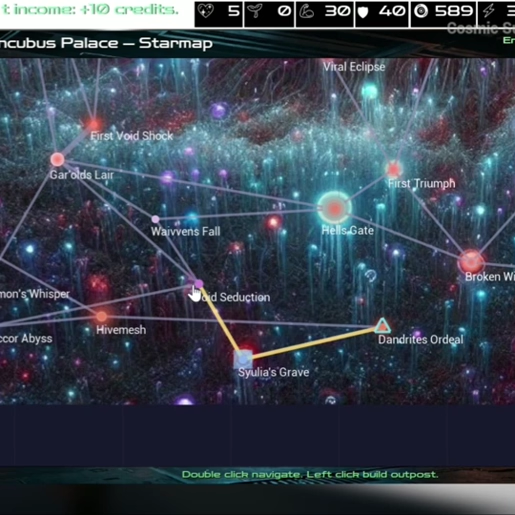
The longer you stay in one place, the more word of your whereabouts spreads. Hostile forces from across the galaxy begin converging on your location. Nearby star systems on your scanner shift slowly red as enemies accumulate. The magnitude of the threat keeps growing. And no matter how good your defenses are, you will eventually lose the attrition war—because your girls cannot breed and defend at the same time. Your population is finite. Your warp drive needs cooldown. The clock is always running.
Your only hope is to keep moving. Find a calmer pocket of the galaxy—a Nebula, a forgotten backwater—breed your population back up, refit, and move on before the heat catches up.
This is genius if I do say so myself, and not because of the mechanic in isolation but because of what it eliminates:
It prevents stagnant empire-building because there is only one base and it is mobile.
It prevents late-game micromanagement hell because there is no scattered empire to administer in the first place.
It guarantees the action is always close to you. There are no fronts on the other side of the map. Your only city IS the front. When combat happens, it happens here.
It gives the entire game a permanent "Under Siege" vibe that I find genuinely thrilling. You are never safe for long. You are never bored. You are never clicking through 25 idle cities.
The Chess Analogy
Motion is both necessary and risky. Think Chess.
Bad move? You're stuck defending for a week of in-game time until warp is ready again. Good move into a calm pocket? Congratulations—you have a week to immerse yourself, step out of the Starmap chamber, slow the game to interactive speed, and go flirt with a Waivven priestess. Breed a little. Build something. Repair. Train. It might be exactly what you need to survive what's coming.
(Yes, in CSE your population doesn't magically pop out of nowhere like in most games. You have to breed them yourself. Every Syulibae that crewed your last engagement is a girl you helped bring into existence. That stake is part of what makes the threat response mechanic bite.)
Tuning the Tempo
I won't pretend the design is solved. The current concern is that the action can be too exhausting—you always need to move while being mindful not to get trapped on the warp network between two larger forces, and you need to hurry to breed and build before enemies catch your scent.
The multi-speed design of the game already helps with this. You can slow time down inside calm pockets to immerse, and speed it up while traversing the warp network. Balancing the enemy response rate is the real tuning problem: how fast does the heat rise, how long are the calm pockets, how much breathing room does a typical player need between encounters.
I'm also considering terrain-specific effects. Nebulas could let you stay hidden longer—at the cost of some disadvantage like reduced sensor range or slower warp charge. Asteroid fields could provide cover but limit maneuver. Different parts of the galaxy would then have different risk-reward profiles instead of being uniformly dangerous.
Why This Matters for the Genre
Grand strategy is a beloved genre and it deserves better than the slow death by a thousand clicks that has become its hallmark. Stellaris ships imperfect automation. Civ VII trims builders and adds commanders. These are patches on a fundamental problem: the games are designed to grow until growth itself becomes the burden.
CSE's solution—mobile base plus a forced-nomad mechanic—is one possible escape from that trap. You stay strategic because there is nothing clerical to manage. You stay engaged because the threat is always rising. You stay invested because the one city you have is the only thing standing between you and the galaxy that wants you dead.
I think this is the way to make a modern grand strategy game that is actually fun to play to the end. No mid-game slog. No late-game spreadsheet. Just you, your asteroid, your girls, and a galaxy that won't leave you alone.
Game DesignGrand Strategy4XDev LogWorldbuilding
The Based Software Rating Board: What Gamers Actually Want
April 28, 2026Gaming Culture
Somewhere between the collapse of game journalism credibility and the commercial catastrophe of "go woke go broke" AAA releases, a counter-culture was quietly building. Gamers—the actual paying customers—never stopped knowing what they wanted. They wanted fun. They wanted beauty. They wanted games that treated them as adults.
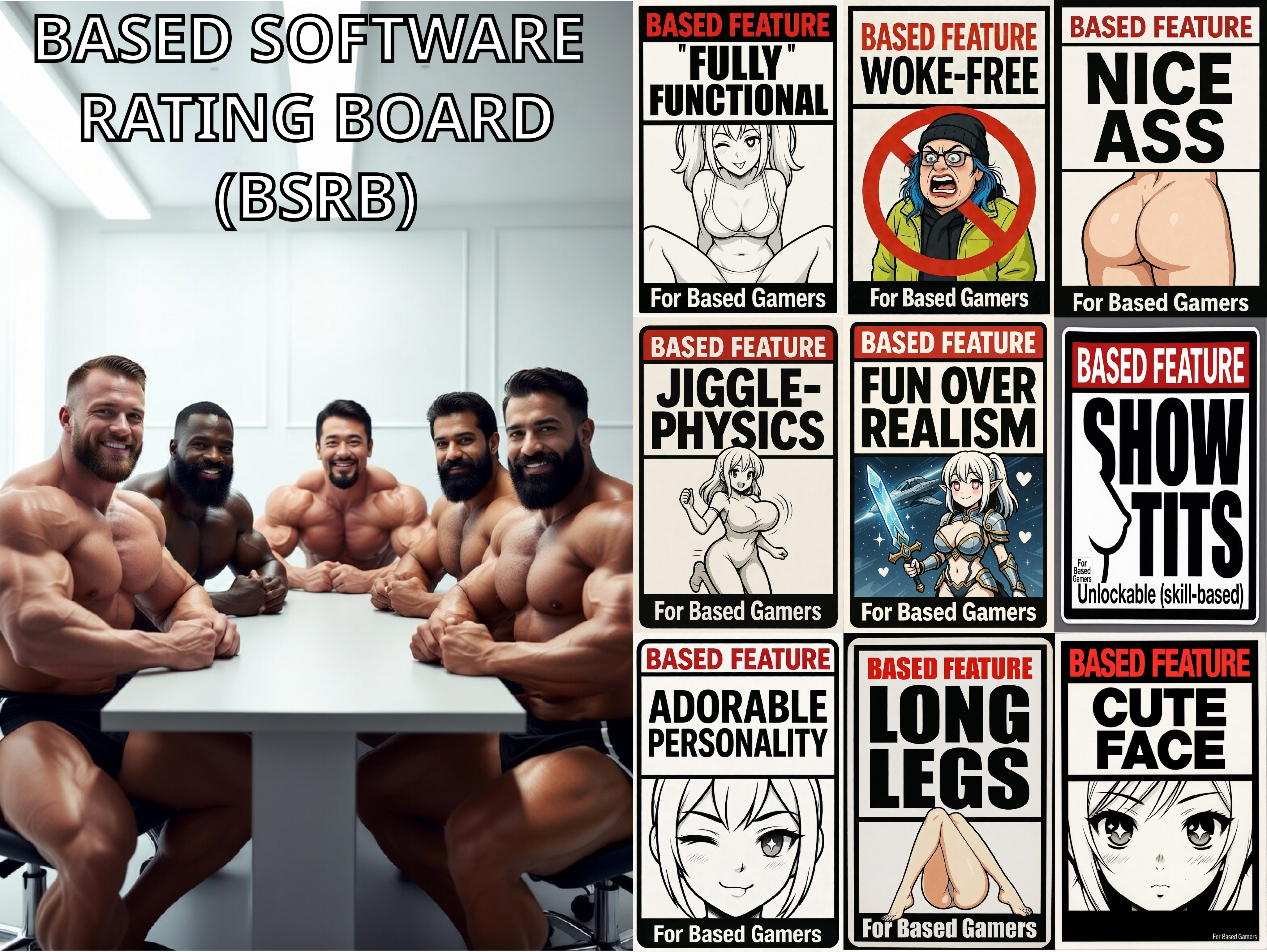
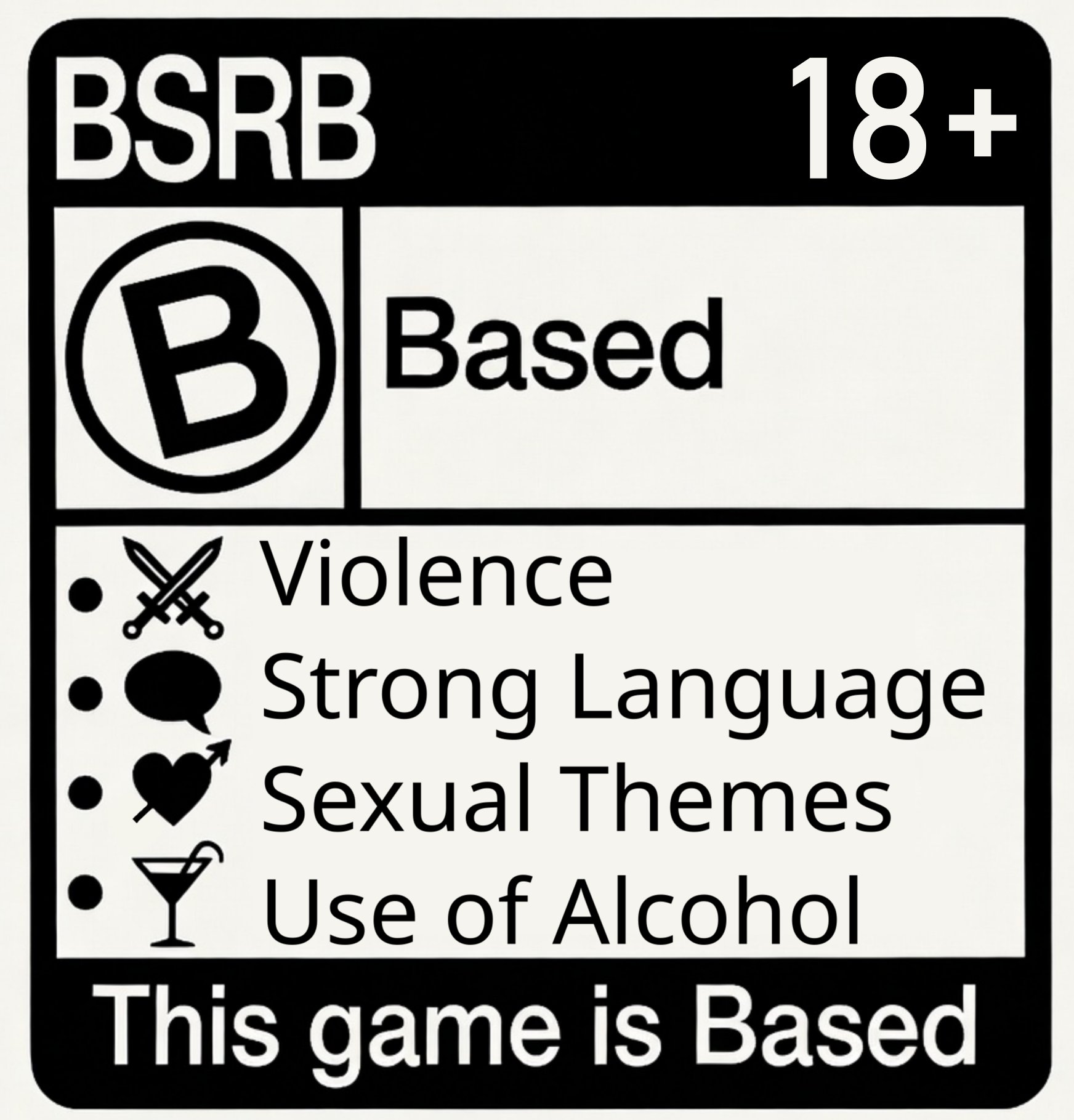
Enter the Based Software Rating Board (BSRB): a fictional, comical, but brutally honest rating system by men, for men. No ESG consultants. No sensitivity readers. No woke design committees. Just a diverse panel of chads from every corner of the planet, evaluating games on the things that actually matter to male gamers.
In this post we go through every BSRB badge and explain exactly how Cosmic Succubus Evolution earns it.
The Board Itself
Look at that committee. White, Black, Asian, Brown—all jacked, all smiling, all clearly united by the same love of good games. That's the point. "Based" isn't a race thing or a political thing. It's a quality standard. Games made by men who love games, for men who love games. The BSRB doesn't care about your pronouns or your ESG investment score. It cares whether your game is fun, beautiful, and honest about what it is.
BSRB: Woke-Free
Let's start with the most obvious badge because it's the one the gaming industry has been failing hardest at for over a decade.
"Woke" in gaming means your game is designed primarily to satisfy a small but very loud activist minority rather than the paying audience. It means angry, androgynous characters who lecture you. It means beauty treated as problematic. It means romance and sexuality scrubbed out because someone on the dev team was offended by the concept of attraction.
The Woke-Free badge means none of that is happening. No lectures. No ugly-by-design characters. No ideologically motivated removal of content that the audience actually wants.
Here's the thing that exposes the whole charade most starkly: the critic score versus user score gap. For years, mainstream game review outlets have handed out high scores to games that real players despise, games that real players have demolished with low user reviews and bad sales. The gap isn't a rounding error—it's a chasm. When a game sits at 9/10 from critics and 4/10 from users, something has gone very wrong. Critics aren't representing gamers. They're representing themselves, their social circles, and the ideological currents running through their newsrooms.
And the market has noticed. Gaming journalism has been circling the gutter for years now—layoffs, closures, declining traffic. The audience stopped trusting outlets that consistently told them their preferences were wrong. You cannot pretend to represent a community while reliably scoring their most-hated releases as masterpieces. Game journalists lost the audience because they chose activisim over gaming and tried to push an agenda that the audience has comprehensively rejected.
CSE has no interest in any of that. No lectures. No Karens. Just a game made by someone who loves games, for people who love games.
BSRB: Adorable Personality
This one is harder to define than big boobs or nice ass, but in many ways it matters most. A physically stunning character with a repulsive personality is worse than worthless—she poisons every scene she's in. But a girl with a truly adorable personality becomes unforgettable. You want to protect her. You think about her. She's the reason you replay.
My best reference point is Alita from Battle Angel Alita. Pure heart. Iron will. Curious as a child, yet she faces the heaviest philosophical questions and the most terrifying battles imaginable—and through all of it maintains a realness and tenderness that's genuinely enchanting. She's not trying to be cool. She just is.
But perhaps the most instructive example—in both directions—is Sarah Kerrigan from StarCraft. In her original human form she was genuinely endearing: strong but vulnerable, a telepath who had endured horrific trauma yet still had a warmth that peeked through the assassin persona. She morally opposed Mengsk's use of Zerg weapons on civilian populations. She tried to reassure Raynor when he was horrified at being ordered to leave her behind on Tarsonis. And when they first met?
She called him a pig—because she'd already read his mind. He protested he hadn't said anything yet. "Yeah," she replied, "but you were thinking it." Power with sweetness underneath. That's the Golden Thread.
Then she gets infested. The Queen of Blades is cold, calculating, utterly ruthless. The warmth is gone. The humor is gone. And something interesting happens: the audience doesn't exactly hate her—but they stop loving her. They start hoping. Hoping it can be reversed. Hoping the real Kerrigan is still in there somewhere.
Blizzard understood this perfectly. The entire arc of StarCraft 2—three games, years of development—is essentially their answer to that hope. They reverse the infestation. It doesn't quite stick; she's consumed by vengeance, still cold. So they go further: by Legacy of the Void she's been transformed into a Xel'Naga—visually something between a Phoenix and a giant angel woman—selfless, transcendent, sacrificing herself for the universe. A years-long narrative shaped almost entirely by the audience's desire to get sweet Kerrigan back.
They never quite succeeded. But the fact that three games of lore are shaped by that desire is itself the proof: male gamers want sweet girls. They will follow a story for years in hope of getting one back.
In CSE, there is an extensive story with unique, adorable, characters that have flaws but develop as the story progresses. Even the procedural Syulibae girls have unique personalities built from traits, backstory, and AI-driven conversation.
I understand that we like strong but not cold girls, smart but not condescending, sexy but also sweet. Conventional "wifely" warmth with that specific, personal weird edge that makes a character feel like a real individual rather than a template, and I carry that philosophy into the game's design.
BSRB: Big Boobs
No pretense required. Men like big boobs. This is not controversial among anyone who isn't actively trying to be contrarian. Science has even weighed in—research suggests that looking at attractive physical features is measurably good for men's cardiovascular health and mood. There is literally a health argument for big boobs in games.
The anti-big-boobs movement in gaming was never organic. Real male gamers were never petitioning developers to make their female characters less attractive. That pressure came from outside the audience, from people who were not the target demographic and had no business dictating the aesthetics of products they weren't buying.
In CSE, the Syulibae are stacked. That's the design. That's the intent. I'm not apologizing for it.
That said, you won't start with a gallery of goddesses. Your initial Syulibae population is variable—some beautiful, most merely passable. The real game lies in the gene pool. Breeding strategically, managing traits, and evolving your colony towards those peak strong beauties that we crave, this is a core part of CSE's progression loop. You earn your gorgeous harem, and that makes it more meaningful.
BSRB: Cute Face
The "new Ciri problem." CD Projekt RED took an iconic, beloved character and redesigned her toward androgyny and hardness for The Witcher 4. The backlash was severe enough they appear to have walked it back somewhat—though we won't know the final design until the game releases.
But there's a deeper issue here that connects directly to the Adorable Personality section above. The problem isn't only androgyny—it's expression. A woman who never smiles, whose face is locked in permanent aggression and challenge, actually looks less attractive regardless of her underlying features. This is exactly what happened to Kerrigan after infestation: the transformation removed her warmth, and warmth shows on a face. The new Ciri's promotional imagery had that same quality. Looking at the reveal, I genuinely found myself scanning the screen wondering where Geralt was—until it hit me that this was Ciri. My first thought: "Poor bastard must have taken too many mutagenic potions. At least he didn't grow tits." I meant it as a joke, but it's also just... accurate. When a woman is designed to look indistinguishable from a hard-bitten mercenary male, the Cute Face badge has failed at the source.
Based gamers want female characters with faces they actually want to look at—feminine features, expressive eyes, the kind of face that invites you in rather than pushes you away. That sounds like an embarrassingly low bar. In the current AAA landscape, apparently it isn't.
CSE's Syulibae have large expressive anime-influenced eyes, delicate features, and a hauntingly beautiful aesthetic—attractive in a way that feels slightly otherworldly, because they are otherworldly. The character art direction has never compromised on this.
BSRB: "Fully" Functional
Sex is the most fundamental motivating force in biological life. It's woven into every complex emotion: love, jealousy, desire, the drive to improve yourself. A game that completely shies away from sex in an adult setting isn't being tasteful—it's being immature. It's treating adult players like children who need to be shielded from the realities of human nature.
The Fully Functional badge means the game actually goes there. Interactive 3D sexual gameplay, not pre-rendered cutscenes you passively click through. Actual participation.
To be fair, CSE also currently includes a "summarized" sex mode—you choose the participants and receive a result with pre-rendered animations—so I won't throw too many stones at Subverse for that particular approach. As I discussed in the Subverse review, the real difference is that CSE's sexuality is woven into the core gameplay systems rather than treated as a side feature: breeding mechanics, dating, domestication training, AI-driven conversations—all interconnected.
Beyond that, CSE is building toward a non-summarized mode—a hands-on, skill-based approach where there are no pre-rendered screens and the player takes a direct role. Sex in this mode is a player skill with choices of items, techniques, and resource management. Performing well leads to better evolution outcomes. The summarized mode stays for those who prefer a quicker result, but the depth is there for players who want it.
And it ties into everything else: the story, the strategy, the colony survival. It's woven in.
BSRB: Fun Over Realism
There's a recurring criticism leveled at games like CSE: "unrealistic beauty standards," "unrealistic romance scenarios," "no one actually looks like that." My answer is always the same: so what?
Games are not documentaries. They are spaces for escapism and wish fulfillment—the exploration of fantasies that the real world doesn't provide. Nobody watches an action movie and complains that real humans can't survive explosions. Nobody reads a fantasy novel and objects that dragons aren't real. But let a game feature beautiful women who are genuinely interested in the player character and suddenly we're subjected to lectures about "realistic expectations."
No. Games are allowed to be fun. Players are allowed to enjoy scenarios that don't reflect their daily lives. The Fun Over Realism badge means the developer refused to let realism-policing ruin the experience.
In CSE you are an Incubus—literally a supernatural entity whose purpose is to be irresistible to women. The Syulibae are engineered by a goddess. The entire premise is fantasy by design. I lean into that without apology.
BSRB: Jiggle Physics
Physics simulation applied to the parts of a woman's body that move when she moves—boobs, ass, the flex of leg muscles and calves during combat animations. This is the kind of technical detail that a certain type of developer dismisses as "gratuitous" while implementing it would make the difference between a character that feels alive and one that feels like a plastic doll.
Jiggle physics communicate mass, softness, and physicality. They make a character feel like she actually exists in the world with weight and presence. They're also, yes, enjoyable to look at. Both things can be true.
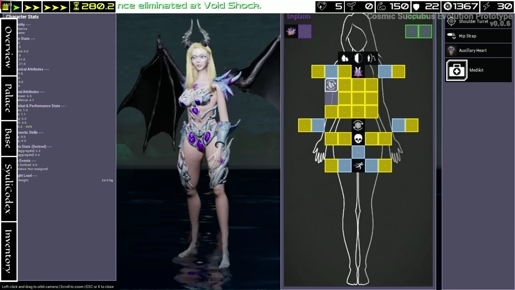
CSE has jiggle physics—reintroduced in the v0.0.6 update on the new character model. This is a feature that gets polished, not cut.
BSRB: Long Legs
Sexy women with long, elegant legs. There's an entire aesthetic tradition here—the long-limbed feminine ideal runs through classical sculpture, fashion, and fine art for good reason. The era of deliberately shortening female character proportions in the name of "diversity" was an era of games designed to satisfy critics rather than players.
The Syulibae are tall, long-limbed, and built for visual impact. This is by design and will remain so.
BSRB: Nice Ass
A well-sculpted posterior is attractive and male players notice and appreciate it. The era of games actively flattening female characters' bodies in the name of "not objectifying" them was an era of games made for critics rather than players. The Nice Ass badge is a signal that the developer is building for the actual audience.
In CSE: yes. Here's the proof from the in-engine model
BSRB: Show Tits
The "Unlockable (skill-based)" subtitle on this badge is important. It's not just about nudity existing—it's about nudity being something you work for and earn. That distinction matters enormously for game design.
When content is locked behind skill and progression, it creates genuine motivation. Players engage with systems more deeply. They feel rewarded rather than simply handed something. The existence of unlockable NSFW content turns the entire game into a sustained engagement loop where every mechanic feels connected to something the player actually wants.
In CSE, nudity and sexual content is unlocked through relationship progression, domestication training, AI conversation, and breeding gameplay. The girls don't just hand it over. You earn it by being a capable Incubus—and that's good game design dressed in adult content, where the two reinforce each other perfectly.
BSRB Rating: CSE is Based
Cosmic Succubus Evolution was designed from the ground up with all of these principles in mind. Not as a reaction to culture war discourse, but because these are simply the things that make adult gaming genuinely excellent. Beautiful women. Adorable personalities. Real interactivity. Systems deep enough to respect the player's intelligence.
The BSRB exists as a joke—but like all good jokes, it contains a serious truth. There is a massive, underserved audience of adult male gamers who know exactly what they want and have been watching the industry fail to deliver it for years. CSE is the answer.
Based. For Based Gamers.
Gaming CultureNSFW GamesGame DesignIndustryBased
Sci-Fi Physics That Could Actually Be Real: Diproton Stars, Black-Hole Goddesses & the Cosmic Succubus Universe
March 4, 2026Worldbuilding
What if a single physical constant were slightly different? Not by orders of magnitude—just 2%. That's all it would take for the Diproton, a notoriously unstable isotope of helium with no neutrons, to become stable. If that happened, the entire universe would look fundamentally different. Stars would burn with altered colors, stellar lifetimes would shift, and the night sky itself would transform.
This isn't fantasy. This is real peer-reviewed science pondering on the multiverse, and it's the scientific grounding of the Jardenverse—the universe of Cosmic Succubus Evolution.
But thats not all, what if I told you there's a feasible link connecting our known universe to the fantasy of the Jardenverse? You see, there is serious scientific reasons to suspect that our universe is actually the interior of a gigantic blackhole, and while the topic of Singularities (blackhole interior) is poorly understood, in its conventional interpretation as a point of infinite density, it doesnt seem conducive to life. But, in the more recent Fuzzball interpretation of entangled cosmic strings, life just might thrive. And this is where I apply creative license.
If the interior of an entangled mess of cosmic strings can create conscious life, then it should not be far fetched to say this macro system itself can be alive, that is the blackhole is alive and it is our universe and her name is Neximeida and she lives in the Jardenverse, a universe containing our own, and it is her struggle with her cosmic sister that lead to the creation of what ancient humans thought were Succubi.
If your mind is blown at this point, then read on.
Part I: The Diproton — A Tiny Change That Reshapes the Cosmos
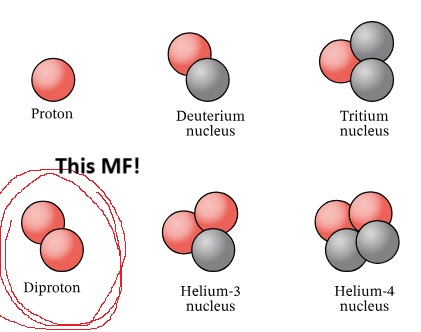
Isotopes are variations of atoms with different neutron counts. You've heard of Deuterium (one proton, one neutron) and Tritium (one proton, two neutrons)—these are isotopes of hydrogen. Helium typically comes as Helium-4 (two protons, two neutrons) or Helium-3 (two protons, one neutron).
Then there's the Diproton: Helium-2. Two protons, zero neutrons. In our universe, it's wildly unstable—it forms for a fleeting instant during stellar fusion and immediately decays back into hydrogen. The strong nuclear force in our universe is just barely too weak to to resist the electrostatic repulsion of two protons without a neutron mediating.
But what if it were about 2% stronger?
The Diproton would become stable. And that changes everything.
The Old (Wrong) Assumption
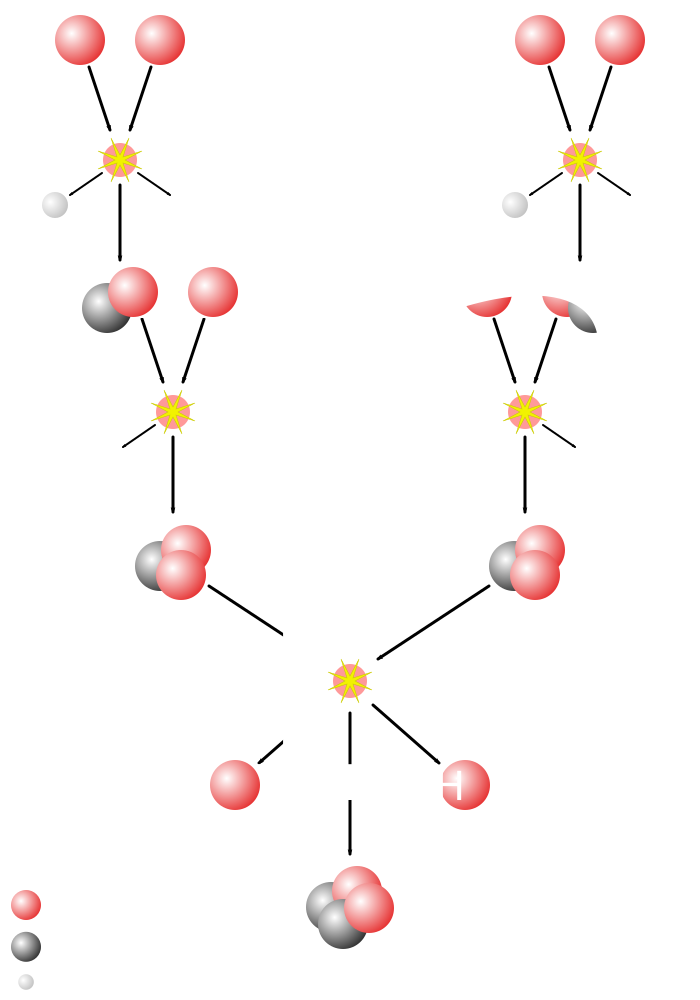
For years, physicists assumed a universe with stable diprotons would be catastrophic for complexity. The reasoning went like this: the Proton-Proton (PP) chain is the dominant stellar fuel cycle in stars up to about 1.3 solar masses, responsible for roughly 83% of our Sun's energy. In the PP chain, two protons fuse, and one must undergo inverse beta decay to become a neutron—forming deuterium. This is extremely slow because it requires the weak nuclear force, and that slowness is what regulates how fast stars burn.
If diprotons were stable, the thinking went, stars could skip that slow weak-force step entirely. Protons would fuse directly into stable diprotons, and the PP chain would accelerate by a factor of 1018. Stars would burn a quintillion times brighter, exhaust their fuel almost instantly, and the universe would be a sterile hellscape—no time for planets, chemistry, or life.
Why That's Wrong
Recent research showed this catastrophic picture is incorrect. The key insight is Coulombic repulsion—the electromagnetic force that makes protons repel each other. Even if two protons successfully fuse into a stable diproton, that diproton still carries a +2 charge. It electrostatically repels other protons even more strongly than individual protons repel each other, which actually discourages further fusion reactions involving the diproton.
But here's the elegant part: electrons carry a -1 charge. The diproton isn't repelled by electrons—it attracts them. Through electron capture, the diproton absorbs an electron, converting one of its protons into a neutron. This transmutes the diproton into deuterium, which then continues through the normal PP chain as usual.
The result? The overall stellar fuel cycle is altered, but not catastrophically. Stars behave differently, but they still function as long-lived thermonuclear furnaces capable of supporting complex chemistry and life.
What Diproton Stars Actually Look Like
The change of dynamics creates a universe with notable differences:
Stars at roughly one-third the mass of our Sun undergo a dramatic spectral shift—they abruptly transition to light blue, and at a second threshold, to deep blue.
Stars around the mass of our Sun are actually redder than what we observe.
Stars generally burn somewhat brighter across the board.
While stars do burn through their fuel a bit faster, they still hang around long enough to support the development of complex life.
The smallest, most frugal stars can live as long as the oldest stars in our universe, with total expected lifetimes exceeding the current age of the cosmos.
A diproton universe isn't sterile—it's just different. Beautifully, measurably different.
This is the physics foundation of the Jardenverse. CSE's universe operates with a strong nuclear force roughly 2% stronger than ours. The stars are generally more red, a bit smaller on average, painting the galaxy in deeper warm tones—until you encounter the larger ones, which may rapidly transition to brilliant blue as their fuel cycle shifts to a different regime.
That's why the Jardenverse features more red stars than usual and thats grounded in actual peer-reviewed astrophysics. Although the full story flavours this scientific core with a fantasy of varying physics depending on region, which allows for a rich tapestry of cosmic phenomena and narratives.
Part II: Are We Living Inside a Black Hole?
Now let's zoom out. Way out. What is the universe itself?
Here's a remarkable coincidence—or maybe it isn't a coincidence at all. If you take the observable universe's estimated mass (around 1053 kg) and compute the Schwarzschild radius for that mass, you get a number suspiciously close to the observable universe's actual radius (~46 billion light-years). The mass-to-radius ratio of our universe matches what you'd expect of a black hole.
Galaxy rotation patterns add another data point. The way galaxies spin, the distribution of angular momentum—some researchers argue these patterns are consistent with what you'd expect inside a black hole's interior.
This is the basis of the "universe as black hole" hypothesis, explored by physicists like Lee Smolin (cosmological natural selection) and Nikodem Poplawski (torsion-based cosmology). It's not fringe anymore—it's a legitimate theoretical framework.
Fuzzballs: Black Holes Without Singularities
But here's where it gets really interesting. Classical general relativity says black holes contain a singularity—a point of infinite density where physics breaks down. That's... unsatisfying, to put it mildly.
String theory offers an alternative: the Fuzzball conjecture, proposed by Samir Mathur. Instead of a point singularity surrounded by an event horizon, a black hole is actually a fuzzball—a tangled, horizon-sized ball of strings and branes. No singularity. No event horizon in the traditional sense. Just an incredibly dense quantum object.
And these strings? They become quantum entangled with each other. Like cosmic spaghetti, pulling one strand affects all the others. This web of entanglement is, according to some interpretations (particularly the ER=EPR conjecture from Maldacena and Susskind), how the "illusion" of spacetime itself emerges. Space isn't fundamental—it's an emergent property of quantum entanglement between strings.
So if our universe is a black hole, and black holes are fuzzballs of entangled strings, then we are living inside a web of quantum entanglement that generates the spacetime we experience.
Part III: Neximeida — The Black-Hole Goddess
This is where science meets story.
In Cosmic Succubus Evolution, the Jardenverse operates on the premise that universes can exist inside black holes—a concept inspired by fecund cosmology. Our universe, the one you and I inhabit, exists inside a black hole named Neximeida.
Neximeida isn't just a black hole. She's a sentient cosmic entity—a goddess. A Celesquar, ancient sentient stars, beings of incomprehensible power, but she went beyond that and became the first celesquar to keep her mind intact after becoming a blackhole, and in that moment of her transformation, our universe was born, this is something that will contribute the CSE's grander cosmic drama.
You see, Neximeida had a spat with others of her kind and was thrown out of Jardenverse core, a place their mythology calls "Heaven". After meeting the wrong type of celestial entity on the intreversible edges of the Jardenverse, Neximeida got the idea to fight her way back into heaven and get her way. To do this Neximeida created an army of horned, winged, bio-adaptable, astrally-gifted, all female beings which look like what someone from earth might call a Succubus. Actully, whats to say that ancient earth lore was not inpired by the visits of beings from other worlds? In the CSE story, The Syulibae, as they are properly called did briefly visit ancient earth and Neximeida has a need for the souls of exceptional human men to lead her army, and this is how the legend of the Succubus was born, tying the folklore and science together in a cosmic tapestry of myth and reality.
The Magic of Sci-Fi: Where "What If" Lives
This is what separates science fiction from pure fantasy.
With fantasy, we can confidently assert that the story can't possibly happen in the real world. Dragons, magic spells, enchanted swords—wonderful fantasies, but we know with certainty they they are just that.
But proper research-grounded sci-fi? That's different. The diproton physics in the Jardenverse are based on a real peer-reviewed paper. The black-hole cosmology draws from legitimate theoretical frameworks being actively researched by physicists. The fuzzball conjecture is a real proposal in string theory. Fecund cosmology is a real hypothesis.
You cannot definitively say "this could never happen." And that plausibility is magic.
That's where imagination truly lives—in the space between known and unknown, where one thinks "what if..." and the universe doesn't immediately say no. Where the laws of physics, as we understand them, leave the door open for the extraordinary.
The Jardenverse isn't just a game setting. It's a thought experiment wearing the clothes of a cosmic succubus opera. And the best part? It just might be real.
Massive Chalice: Generational Gameplay vs Save Scumming
January 15, 2026Game Analysis
Massive Chalice, released by Double Fine Productions in 2015, tackled one of tactical strategy gaming's oldest challenges: save scumming. By introducing a generational gameplay mechanic—where warriors age, marry, have children, and eventually die—the game encouraged players to accept death rather than constantly reload saves.
Dark Clouds Behind the Innovation
Before exploring the brilliance of this generational mechanic, it's worth understanding Massive Chalice's context. The game was admittedly light on content, featuring what many players recognized as placeholder-quality character models and a bare-bones story. This wasn't laziness—it was Double Fine's survival strategy during a difficult financial period.
During this era, founder Tim Schafer split the studio into smaller teams, each working on different projects through their "Amnesia Fortnight" prototyping process. Resources flowed to winners while underperforming projects were quickly terminated—a harsh but necessary reality that claimed casualties like the now-infamous Spacebase DF-9. That Massive Chalice survived this crucible speaks to the strength of its core concept, even if budget constraints limited its execution.
The Save Scumming Problem and Its Perils
Tactical games like X-COM might not seem emotional at first glance, but they absolutely are. Soldiers aren't easily replaced cannon fodder—they're limited resources you train and watch grow from nervous rookies into hardened veterans. Together, you scrape through brutal missions with dwindling ammo and life-threatening wounds. You build memorable narratives around legendary battles won against impossible odds. And it truly stings when a precious veteran falls despite your best efforts. Eventually, you remember each one by name. This attachment is one of the genre's greatest strengths.
But here's the problem: what do you do when you're about to lose a veteran you've invested hours into? You reload the save and try again, of course. And again. And again. This is save scumming, and it creates a vicious cycle. Once you taste the power of undoing death, the temptation to optimize grows. You start reloading over every little setback, chasing flawless outcomes. It becomes self-reinforcing—your veterans become super-soldiers with accumulated perfect-run experience, making them too valuable to risk. Meanwhile, rookies never get developed because you can't afford to field them. The result? Gameplay becomes an exhausting grind, losing all dynamism as recovery from setbacks devolves into a single-minded quest for perfection.
Massive Chalice's Revolutionary Solution
Massive Chalice solved this elegantly through forced generational turnover. Your heroes don't just risk death in combat—they inevitably age and die of natural causes over the game's 300-year timeline. Warriors marry, have children, and pass their genetic traits down through bloodlines. Veterans will die, but their children carry the legacy forward.
This simple mechanic transforms the entire experience:
Death becomes acceptable. It was inevitable anyway—better to plan for the next generation.
New characters have inherent value. They're not "worse versions" of veterans—they're heirs with evolved bloodlines and the potential to surpass previous champions.
Long-term dynasty management replaces short-term optimization. You're building legacies, not protecting individuals.
Save scumming loses its appeal. As one player put it:
Finally got around to playing this one a few months back, really enjoyed it for what it was. Only got squad wiped once. It felt shitty but since it's generational, you know you can bounce back stronger.
Instead of fixating on keeping Colonel Jenkins alive forever, you invest in the Jenkins bloodline. Will his daughter inherit his accuracy? Can you breed that trait with another family's toughness?
The Attachment Trade-off
But Massive Chalice's solution came with a cost. By making death inevitable and routine, it inadvertently reduced individual character attachment—the very thing that made X-COM's moments so emotionally powerful. When everyone is temporary, it's harder to care about Jenkins in the first place.
The game's limited production values made this worse. The high turnover rate, combined with generic character models and virtually zero personality, left characters feeling like disposable grunts rather than beloved heroes. The mechanical solution was brilliant, but it sacrificed the emotional investment that defined the genre.
CSE's Innovation: Reincarnation and Waifus
Now that you understand how crucial attachment is in tactical games, imagine the emotional investment when you replace generic soldiers like Jenkins with sexy Waifus!
Of course, losing those Waifus would hurt even more. That's where Cosmic Succubus Evolution introduces its key innovation: reincarnation.
Space Succubi don't truly die. Their ancient spirits return to the Astral Plane, a realm administered by their goddess Neximeida, where they await reincarnation—provided you've, ahem, skillfully bred an enticing enough body for them to return to. It also requires a reincarnation ritual conducted by a talented priestess. Here's how CSE expands on Massive Chalice's foundation:
"Like an orgasm, the ancient spirit enters the Syulibae's body during the reincarnation ritual. Merging of minds feels like opening a third eye that sees many lifetimes of experience. But afterwards, the minds remain separate, merging slowly over a lifetime and return to the Astral as one."
This mechanic gives us the best of both worlds:
Death still matters. You lose immediate combat power and must retrain the reincarnated warrior from youth
Characters stay unique. Personalities and bonuses from spirit-linked traits return, maintaining emotional investment.
Breeding becomes strategically meaningful. You're not just enjoying a Hentai mini game—you're cock-smithing and evolved bloodline to reincarnate into!
Generational progression continues. total power progression doesn't reset to zero even as individuals cycle through life and death
The reincarnation system transforms death from a permanent loss into a temporary setback with interesting strategic implications. Do you rush the reincarnation to get your veteran back quickly but in a suboptimal body? Or do you carefully breed the perfect genetic vessel over multiple generations, accepting the wait?
Holistic Integration, Not Bolt-On Features
What sets CSE apart is its holistic design. Reincarnation isn't just a mechanic—it's woven into the game's lore and every system. Breeding, relationships, and rituals are integral to both story and gameplay, creating a cohesive experience that feels natural and immersive.
Everything fits together like a puzzle. Massive Chalice proved that generational gameplay could solve save scumming. Double Fine showed that players would accept death if it was inevitable. CSE builds on these foundations, adding X-COM Apocalypse's deep simulation and tough battles to forge genuine bonds with your Waifus. Then it layers in reincarnation to preserve attachment, letting you take things further through dating, breeding, and evolving the next generation—all through unapologetically adult content. These aren't bolt-on systems; they're synergistically designed to maximize the experience.
When Subverse was announced, it felt like a watershed moment for adult gaming. Here was a game that wasn't hiding in the shadows—it was a AAA-quality production with actual voice acting, a sci-fi universe reminiscent of Mass Effect, and the audacity to be unashamedly adult. Studio FOW raised over $2 million on Kickstarter plus over $13.9 million on Steam , proving there was massive demand for exactly this kind of experience.
And they delivered on some fronts. The voice acting is genuinely a pleasure to listen to—professional quality that you'd expect from any mainstream title. The character designs are memorable, there's a clear love for the sci-fi space opera genre woven throughout and the humor, although excessive in a Deadpool type of way, which can diminish the immersive experience, is nonetheless funny. Traveling around the ship, interacting with your crew of Waifus, it genuinely feels like the adult Mass Effect we'd been craving.
The fall from Promising to todays 55% mixed rating
So then you actually play the game. First of all, the graphics didn't push any boundaries, but being last-gen tech wouldn't matter if the gameplay was good, however this is where the dream starts to crack.
The tactical combat—which was supposed to be one of the pillars of gameplay—ended up being a chore rather than a joy. It's oversimplified to the point where there's no real strategic depth. You go through the motions, clicking through encounters that feel more like obstacles between story beats than engaging gameplay systems. Where's the tension? Where's the optimization puzzle? The most sophisticated part was trying to position your units for a rear attack which dealt extra damage but this wasn't enough for deep gameplay. It became something I slogged through rather than looked forward to.
Now the Space combat, was a simple "Shoot 'em up" style arcade mini-game, which was actually fun, there wasnt much depth to it but there was a minor upgrade's system and depending on your choice of Waifu co-pilot, you'd have different abilities to deal with the baddies. Overall I found it an enjoyable reflex exercise but it's just that, there is no damage to repair between missions, ammo to restock, play performance didn't impact long term game state and you could always skip the mission after 3 retries.
And the adult content? Despite all the marketing around being an unashamed NSFW game, the actual execution is pre-rendered videos. Your only interaction choices was the speed of the video and when to end it by pressing "Cum". This isn't the interactive 3D experience many of us hoped for—the whole game is essentially a click-thru visual novel with some skippable cutscene/mini-game's. Don't get me wrong, the production quality of those scenes is high, but there's a fundamental difference between watching content and participating in it.
The Development Nosedive
Perhaps most disappointing is what happened after the Steam launch. The sales success didn't translate into accelerated development. Updates slowed to a crawl. After months of waiting, amidst the depths of Corona-induced lockdowns, half-baked game systems that felt like they were made by a single employee checking boxes to gain a bonus had arrived. The promise of a Mass Effect like game became distant as those months turned into years, and then one day out of the blue, boom, they slapped the "1.0" label on it and called it a full release, leaving me to wonder where all that money really went?
It's a cautionary tale: even with millions in funding and clear market demand, execution matters. And sustained execution matters even more.
What CSE Learns From This
Subverse proved the market exists. It proved that gamers want serious, well-produced adult content integrated with real gameplay. But it also showed where the pitfalls lie: simplified gameplay that becomes a means to an end, passive adult content instead of interactive systems, and development momentum that cashes out after reaching success.
These are lessons I carry into Cosmic Succubus Evolution. Tactical combat must be genuinely engaging—something you want to master, an optimization rich experience that leads to deep replayability. Adult content that is holistically integrated into the gameplay systems, not bolted on as cutscenes. And development must be sustained by passion, because without it, no amount of funding will matter.
Subverse was almost what we wanted. Almost.
NSFW GamesReviewMass EffectStudio FOW
X-COM Apocalypse: The GOAT of Tactical/Strategy Gaming
January 5, 2026Game Analysis
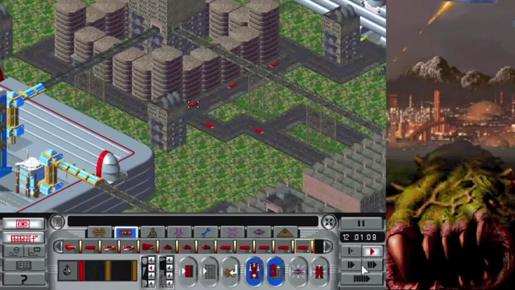
There's a reason I keep coming back to X-COM Apocalypse after all these years. Released in 1997 by Mythos Games under Julian Gollop's direction, it remains the most sophisticated tactical/strategy game ever made. Not because of graphics or production values, but because of systems—deep, interlocking systems that create emergent gameplay no modern title has managed to replicate.
Sophistication Beyond Its Time
Where do I even begin? Apocalypse simulated an entire city—Mega-Primus—with multiple corporations, government factions, criminal organizations, a cult in bed with the alien nemesis, all with their own agendas, resources, and relationships. You weren't just fighting aliens and their spreading infestation in the shadows; you were navigating a political landscape where your funding depended on keeping the Senate happy while not pissing off the megacorps who supplied your equipment.
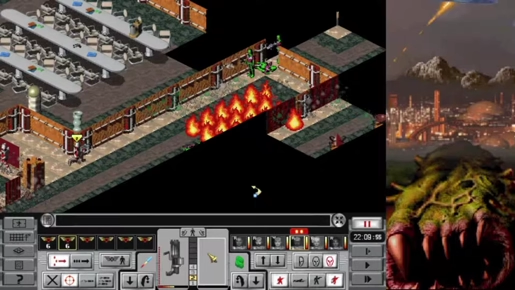
Speaking of equipment, the inventory system was a masterpiece of complexity. Each soldier had a limited carrying capacity based on strength and encumbrance. Every piece of armor had specific coverage zones—head, torso, limbs—with different protection values, and a durability counter which meant that parts of your armor could break durring battle. Weapons had firing modes, reload times and ammo types, including incendiary which can create a ever growing wall of damage to contain your enemies, and you can douse it with gas granades if it gets out of hand. You had to think carefully about loadouts, balancing firepower, mobility, and protection.
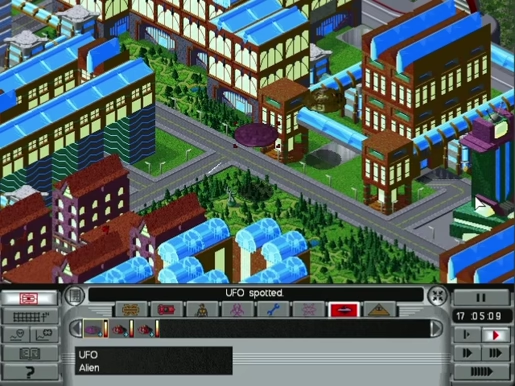
And the air battles? If you only played the modern XCOM's, then you missed out on one of the most thrilling aspects of Apocalypse. You had to manage your vehicles inventories, packing them with equipment and not just weapons but electronic equipment for accuracy, countermeasures and more, there were even engine upgrades. This is very important if you want to be efficient, for example, sure you can try and buy an expensive Hawk Air Warrior to duke it out with the UFO's, trading blow-for-blow, and you'd probably break your wallet in repair bills doing so, or you can just buy some inexpensive hoverbikes, slap on some engine upgrades and watch these mosquitoes slowly take down UFO's hundreds of times their size because their too damn fast to hit!
By the way, being a serious simulation, every projectile from every vehicle was simulated and every building was destructible. You could actually position your hoverbikes in front of a hostile corp and taunt a UFO to shoot it, the incoming fire would often miss and have a chance of hitting the building instead, sometimes collapsing it and encouraging the enemy corp to "reevaluate" their political stances as a result!
The game even had planned features for political assassination quests and multiple alien dimensions to explore before budget and time constraints forced cuts. Imagine that—a game from 1997 that was trying to be even MORE ambitious than the already staggering scope it achieved. They ran out of runway, not vision.
The Grenade Catch: Gaming's Greatest Mechanic
Let me tell you about my favorite gaming memory of all time.
In X-COM Apocalypse, when an alien threw a grenade at your soldier, you could catch it. Not through some quicktime event or random dice roll—through actual reaction time and positioning. In realtime mode, which despite criticism was actually a very good and intuitive way to play, if you were fast enough to pause the game and the granade was close enough, then you'd equip it and throw it back at the enemy ASAP!
The satisfaction of such a save, watching it arc back toward the alien that threw it—was pure gaming bliss.
But here's where the sophistication really shines: sometimes you'd fail to catch it in time and it would explode at your soldier's feet, damaging their leg armor, maybe causing serious injuries that required another squad member to rush over with a medikit. Suddenly you found yourself needing to ration armor pants in battle, and later other parts of armor too, and as the damage on your soliders accumulated, you'd need to consider who to pull back from the front line to try and save everyone.
This wasn't scripted. It emerged from the simulation. Every bullet had a trajectory. Every piece of armor had coverage zones. Every wound had consequences.
An Optimizer's Dream
The whole experience of rationing limited ammo, armor, and managing weakening soldiers against an overwhelming alien horde, and still emerging victorious through skill and optimization... it was an optimizer's dream come true.
You learned the systems. You understood that brainsuckers would run and jump at your heads, so you set your weapons to full auto for the melee and mowed them down. You knew how an Enzyme missile looked and that it would eat away your armor, so you quickly took off the armor before impact to spare it. Experience made you better—not because of XP points, but because you got better as a commander, you understood the simulation and could plan accordingly.
The Modern Tragedy: Streamlining the Soul Away
And then came the modern "reimaginings."
Jake Solomon's XCOM (2012) and its sequels stripped away almost everything that made Apocalypse special. Instead of simulation, we got dice rolls. Instead of 5 piece armor sets and complex loadouts, we got a simple weapon&armor selection screen, no need to think about ammo or armor durabilities. Instead of simulating how bullets break the environment and then potentially hit your soliders armor plates, we got ability cooldowns and cover bonuses. Instead of emergent gameplay, we got scripted missions on a countdown timer.
Don't get me wrong—those games are competent. They're polished, and to Jake's credit, I know he pitched two more complex versions of the X-COM sequel but was rejected before succeeding on the third, streamlined proposal. Regardless, these new X-COM's, they're not sophisticated.
The dice roll approach bothers me on two fundamental levels:
It replaces skill with luck. When a point-blank shot misses, or when a 95% shot misses three times in a row, it doesn't feel like you made a mistake—it feels like the game cheated you. Your decisions mattered less than random number generation.
Dice rolls are opaque while simulations are intuitive. In Apocalypse, with enough experience, you could predict outcomes. You understood that this angle of fire would hit, that this cover would protect. The simulation was learnable. Dice rolls keep the commander guessing regardless of skill level—a 95% chance feels the same whether it's your first mission or your hundredth.
I understand why. These streamlined games sell better to an audience that became increasingly mainstream since 2000, where as in the 90's, few people except hardcore nerds owned computers. But why not rather educate the audience instead of dumbing down games? wouldn't there be more joy in mastering a complex game and becoming a better tactician along the way than beating a simple game and learning almost nothing?
Perhaps all we really need is a gentler learning curve with more guidance rather than dumber games.
Why CSE Exists
This is why I'm making Cosmic Succubus Evolution.
Those memories of catching grenades, of learning intricate systems, of feeling like a genuine tactical commander rather than a dice-roller—they fuel my drive to create something that recaptures that magic. CSE aims to be a sophisticated tactical/strategy game in the tradition of what Apocalypse was trying to be.
Real simulation over dice rolls. Emergent gameplay over scripted encounters. Systems deep enough to reward hundreds of hours of mastery, and I'd rather teach players how to master them than dumb them down to the lowest common denominator.
And yes, with unapologetic adult content woven throughout, because we're adults who want complete experiences.
The GOAT showed us what was possible. It's time to build on that legacy.











 BSRB: Woke-Free
 BSRB: Adorable Personality
 BSRB: Big Boobs
 BSRB: Cute Face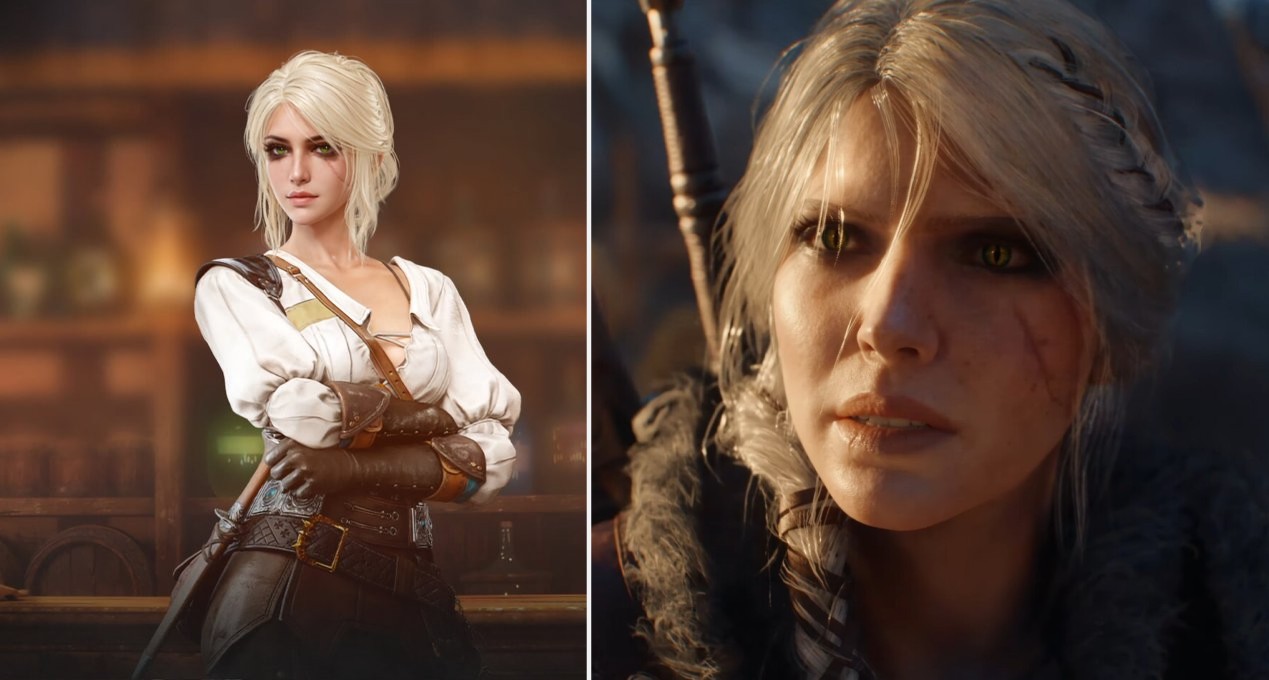
 BSRB: "Fully" Functional
 BSRB: Fun Over Realism
 BSRB: Jiggle Physics
 BSRB: Long Legs
 BSRB: Nice Ass
 BSRB: Show Tits
 BSRB Rating: CSE is Based